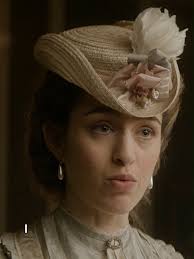
When discussing the legacy of Ireland’s most iconic beverage, the name Arthur Guinness dominates the historical narrative. His signature adorns every glass, and his 1759 lease at St. James’s Gate in Dublin is the stuff of corporate legend. Yet, the foundation of the Guinness empire was built on more than just roasted barley and yeast. Behind the scenes was Olivia Guinness (née Whitmore), an elusive yet paramount figure whose financial backing, social standing, and biological endurance quite literally birthed the Guinness dynasty.
Despite enduring 21 pregnancies and providing the capital necessary to secure her husband’s ambitions, Olivia remains largely absent from mainstream historical records. This article explores the life, marriage, and legacy of the woman without whom the world’s most famous stout might never have existed.
Early Life and the Whitmore Lineage
Born Olivia Whitmore in 1742, she was the daughter of William Whitmore, a grocer operating on Essex Street in Dublin, and Mary Grattan. While her father’s early death left the family without its patriarch, Olivia’s maternal lineage provided a vital safety net.
The Grattan family owned significant tracts of land in County Kildare. In 18th-century Ireland, land equated to high social standing and financial security. This connection to the Irish gentry ensured that Olivia was well-provided for, granting her an elevated status that would soon prove highly attractive to a rising, ambitious brewer.
The £1,000 Dowry That Built an Empire
When Olivia Whitmore married Arthur Guinness in 1761, she was just 19 years old; Arthur was 36. To historians, the union appears highly transactional—a commonality in 18th-century marriages.
Olivia brought with her a substantial dowry of £1,000 (roughly equivalent to £200,000 or $250,000 in modern currency). For an aspiring businessman like Arthur, who had only recently signed the historic 9,000-year lease on the St. James’s Gate Brewery two years prior, this injection of capital was revolutionary.
The Marriage Exchange:
- For Arthur Guinness: He gained crucial capital to expand his brewing operations, alongside immediate elevation in social respectability through Olivia’s ties to the Kildare gentry.
- For Olivia and Mary Grattan: Marrying an ambitious, upwardly mobile businessman provided stability and security for the fatherless Olivia.
The Mother of a Dynasty: 21 Pregnancies in 26 Years
Beyond her financial contribution, Olivia Guinness’s most documented historical footprint is a physical marvel: she experienced 21 pregnancies over the course of two decades.
In an era predating modern medicine, where the maternal mortality rate hovered around 1 in 5, Olivia’s sheer survival is awe-inspiring. Her primary marital and societal duty—as dictated by 18th-century feminine norms—was to produce heirs. She fulfilled this duty with staggering endurance, having her final child in 1787 at the age of 45.
The Guinness Children: Tragedy and Legacy
Of her 21 pregnancies, only 10 children survived into adulthood. While historical records remain tragically silent on the psychological and physical toll of losing 11 children, her surviving offspring became the engine that propelled the Guinness brand into global dominance.
She bore the sons who would inherit, scale, and internationalize the family business.
| Key Surviving Children | Historical Significance |
| Hosea Guinness | The eldest son. His name, translating to “Jehovah is saved,” has led historians like Patrick Guinness to speculate he survived a highly difficult birth. He later became a clergyman. |
| Arthur Guinness II | The second son. He took control of the St. James’s Gate Brewery after his father’s death, transforming it into the largest brewery in Ireland. |
| Benjamin Guinness | Expanded the family’s influence into politics and society, eventually becoming the Mayor of Dublin. |
| John Grattan Guinness | Named to honor Olivia’s maternal lineage, securing the family’s ties to the Kildare gentry. |
Note: Olivia’s descendants eventually funded the restoration of St. Patrick’s Cathedral and became integral to Ireland’s political and economic framework.
The Erasure of Olivia Guinness from Modern History
Despite her foundational role in establishing the Guinness family tree and financing its early operations, Olivia has been largely marginalized in both public history and corporate storytelling.
Historian Patrick Guinness, a direct descendant, authored the leading biographical work on the family, Arthur’s Round: The Life and Times of Brewing Legend Arthur Guinness (2008). In this definitive text, Olivia’s life is referenced a mere 15 times, almost exclusively in relation to her marriage and childbearing.
Why is the Matriarch Missing?
- 18th-Century Gender Norms: Women’s achievements in this era were entirely subsumed by their husbands’ public lives. Olivia left behind no known public voice—no diaries, no letters, and no business ledgers.
- Corporate Glorification of the Founder: Brand storytelling relies on a singular visionary. The mythos of Arthur Guinness signing a 9,000-year lease is heavily marketed, often leaving no room for the complex, domestic realities of the women who sustained the creators.
- Modern Archival Gaps: As observed by visitors to the modern Guinness Storehouse in Dublin, Olivia is frequently reduced to a single piece of trivia—her 21 pregnancies—before being passed over for details on modern brewing technology like the Nitrosurge.
The Unsung Architect of the Black Stuff
While we may never know the intimate details of how Arthur and Olivia met—whether it was a serendipitous encounter near William Whitmore’s grocery shop or a calculated arrangement orchestrated by family friends—the results of their union are undeniable.
Olivia Guinness was not merely a passive figure in the shadows of an Irish dynasty. Her £1,000 dowry was the financial bedrock of the St. James’s Gate expansion, and her physical endurance provided the heirs who turned a local Dublin stout into a global empire. While Arthur’s signature is on the bottle, Olivia’s bloodline and capital are what filled it.
Frequently Asked Questions (FAQ)
Arthur Guinness was married to Olivia Whitmore, the daughter of a Dublin grocer and a member of the Kildare gentry. They married in 1761.
Olivia Guinness had 21 pregnancies during her marriage to Arthur. Out of those 21 pregnancies, 10 children survived into adulthood, including Arthur Guinness II, who took over the family brewing business.
Olivia brought a dowry of £1,000 to her marriage with Arthur Guinness. This substantial sum provided vital capital for Arthur to expand his brewing business at the St. James’s Gate Brewery.
Currently, there is no standalone biography of Olivia Guinness due to a lack of primary historical sources like letters or diaries. Most of what is known about her is found briefly in Patrick Guinness’s book, Arthur’s Round.

Hi, I’m Ghufran Haadi, the creator of Info Celeb. I love writing about celebrities, net worth, lifestyle, and trending entertainment stories. My goal is to keep you updated with simple, interesting, and informative celeb content every day.